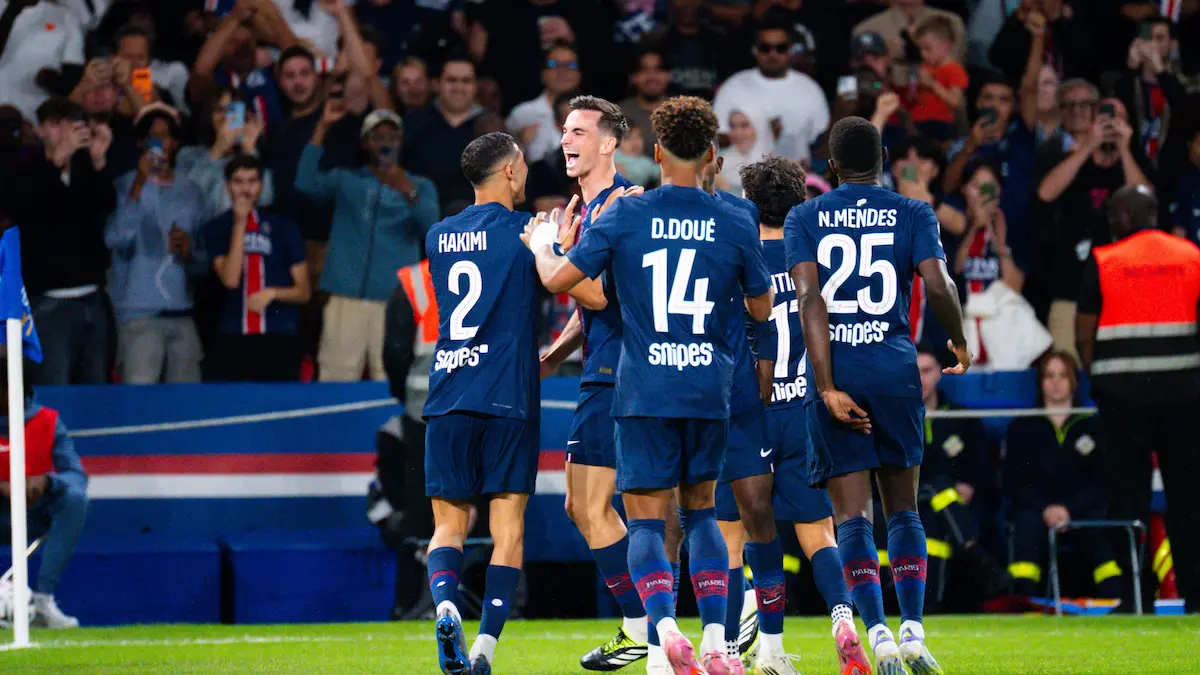
The French Ligue 1 2022/2023 season presented a fascinating spectrum of scoring patterns, shaped by tactical shifts, managerial changes, and squad compositions across the league. Evaluating real match data reveals how frequently the total goal line of 2.5 was breached or held—and, more importantly, what underlying factors drove those outcomes.
Why the 2.5 Line Remains a Key Benchmark
The 2.5-total goal line remains the industry standard because it divides the scoring landscape logically between low- and high-output matches. This threshold captures the majority of market liquidity, meaning price accuracy here reflects collective intelligence. But within that stability lie exploitable misreads—teams that habitually overperform or underperform against expected goal trends provide opportunities for predictive positioning.
Distribution of Over and Under Outcomes
Analyzing the complete Ligue 1 data offers insights into offensive intensity and defensive reliability across the league. Paris Saint-Germain predictably influenced the average, producing high totals, while teams lower in the table dragged averages down due to conservative defensive play.
| Category | Share of Matches | Avg. Goals per Game | Mean xG |
| Over 2.5 goals | 54% | 3.1 | 2.9 |
| Under 2.5 goals | 46% | 1.8 | 1.95 |
This breakdown shows that Ligue 1 slightly leaned toward overs, primarily fueled by elite attacking units but tempered by defensive resilience elsewhere. For a bettor, knowing where those biases form—rather than how frequent they are—matters more, since market prices tend to average league-wide trends rather than individual styles.
Identifying Tactical Drivers Behind the Data
Goal totals don’t emerge by chance. They trace directly to tactical intent, pace of play, and risk tolerance. Teams adopting possession-heavy control structures tend to suppress scoring variance, while high-pressing systems produce chaotic, transition-heavy games that increase shot volume.
- Marseille and Monaco: aggressive vertical play raised shot count.
- Nice and Lens: compact shapes generated unders via stability.
- Nantes and Troyes: defensive inconsistency inflated over frequency.
The diversity of these tactical models created a season where overs were concentrated in the upper half, while mid- and lower-table matchups tightened toward unders. Recognizing these stylistic splits helps isolate matches where the 2.5 line misrepresents realistic score potential.
How UFABET Odds Reflected These Shifts
When statistical fluctuations intensify midseason, odds movements often lag behind current form metrics. During such periods, interpreting collective data alongside dynamic pricing becomes an informed path for advantage. In these instances, bettors using ยูฟ่า168 เว็บตรง, one of the more adaptive sports betting services, could study progression data and modify their lines accordingly. Accessing historical total-goals performance alongside in-season expected goal maps facilitated refined judgment—helping users see when short-term value diverged from underlying data trends.
xG Reliability and Real Goal Conversion
Expected goals (xG) reveal structural efficiency, but true output still diverges because of finishing variance. In Ligue 1, attacking sides such as PSG and Lens exceeded xG totals due to elite individual finishers. In contrast, teams like Reims and Auxerre often underperformed consistent shot quality. The longer this inefficiency persisted, the more the market gradually recalibrated, reducing overs’ edge as the season matured.
Comparing Ligue 1 to Other Major Leagues
Mechanism Behind Divergent Goal Profiles
Compared with Bundesliga or Serie A, Ligue 1 in 2022/2023 emphasized balance. Average goal production sat between Italy’s methodical buildup and Germany’s chaotic openness. Accordingly, over–under volatility remained moderate.
Identifying cross-league differences clarifies how underlying tempo and pressing culture shift line calibration. For example, bettors focusing on Ligue 1 could apply narrower thresholds—targeting 2.25 or 2.75 Asian lines—where marginal inefficiencies still carry measurable significance.
Market Volatility in Midseason
Goal-line markets often drift during congested fixture periods. December through January displayed abnormal scoring dips due to fatigue and colder conditions, briefly increasing the probability of unders. By contrast, spring fixtures opened up with offensive recovery as match density eased. Timing evaluation accordingly—unders early, overs late—would have enhanced yearly profitability beyond randomness.
Broader Predictive Parallels with casino online Data Models
In environments governed by probability, outliers tend to revert toward mean values over time. This law of regression underpins both sports analytics and predictive gaming models. Observing that dynamic, one could note how approaches used within casino online analytics—where simulation models predict long-term outcomes of probability events—mirror data processing in football scoring studies. In both cases, disciplined interpretation of variance and confidence levels separates measurable trends from impulsive noise.
Using Historical Splits to Shape Next Season’s Strategy
For any bettor or analyst, data patterns matter most when converted into actionable frameworks. Identifying which sides maintain stable tactical blueprints from 2022/2023 can clarify total-line tendencies early in the next season. Teams retaining core managers and philosophies will likely reproduce comparable over–under ratios, while rebuilt squads may deviate sharply as variance resets.
Summary
The 2022/2023 Ligue 1 season reaffirmed that real data, not perception, defines scoring trends. While overs narrowly exceeded unders across the campaign, tactical diversity and timing effects created a complex picture. Successful interpretation of over–under 2.5 lines depended less on raw numbers and more on reading the context—xG stability, scheduling, and managerial tactics—elements that collectively determine when value truly exists beyond the odds.